
Search

In 2010, a large number of children experienced febrile convulsions after receiving the FluVax vaccination and many parents began to question its safety.

The Kids researchers have been awarded over $9 million in National Health and Medical Research Council (NHMRC) funding towards child health research including rheumatic heart disease, respiratory infections, and autism spectrum disorder.

A leading paediatric anaesthetist and researcher focused on making anaesthesia safer and more comfortable for children has been named a 2022 Western Australian Young Tall Poppy.

Researchers from the Wesfarmers Centre of Vaccines and Infectious Diseases at The Kids Research Institute Australia have shared their expertise with the community in Cockburn, covering topics ranging from respiratory disease in babies to recurring ear infections in kids.

Up to 40,000 influenza cases could be prevented in Western Australia this winter if more primary school-aged children were vaccinated, researchers at The Kids Research Institute Australia have found.
People are being urged to ensure they've had their vaccination with the 'flu season expected to hit in Western Australia within weeks.
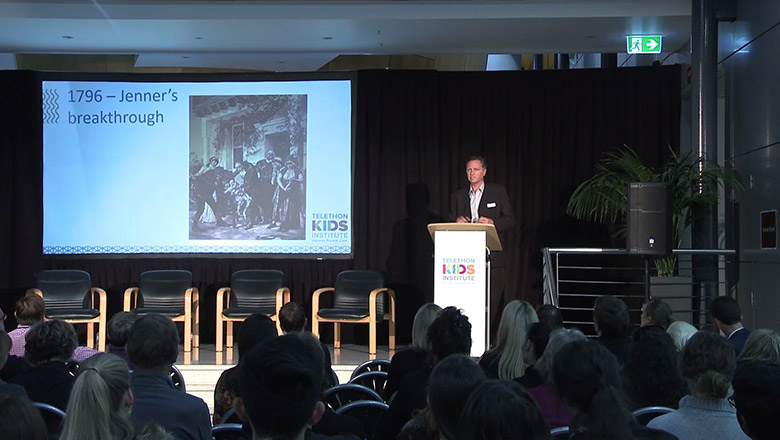
On Monday May 30, The Kids Research Institute Australia held a free public seminar on vaccination, hearing from paediatricians and infectious disease researchers.
Early in the coronavirus disease 2019 (COVID-19) pandemic, evidence emerged that individuals with chronic and immunocompromising conditions faced increased risk of severe infection, including death. The Australian Government and public health authorities prioritised these citizens' access to vaccines, including them in phase 1b of the rollout from 22 March 2021.
Belaynew Christopher Peter Hannah Minda Huong Taye Blyth Richmond Moore Sarna Le MD, MPH, PhD MBBS (Hons) DCH FRACP FRCPA PhD MBBS MRCP(UK) FRACP OAM
Following reduction of public health and social measures concurrent with SARS-CoV-2 Omicron emergence in late 2021 in Australia, COVID-19 case notification rates rose rapidly. As rates of direct viral testing and reporting dropped, true infection rates were most likely to be underestimated.