
Search
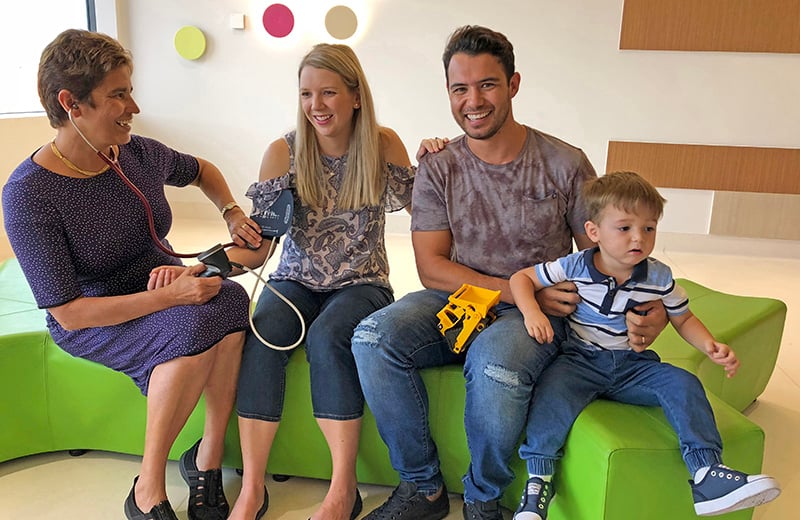
Professor Desiree Silva with the 1000th family - Jess, Michael and Eli The multimillion-dollar ORIGINS Project, an extensive community-based
Early infancy is a critical period for immune development. In addition to being the primary food source during early infancy, human milk also provides multiple bioactive components that shape the infant gut microbiome and immune system and provides a constant source of exposure to maternal microbiota. Given the potential interplay between allergic diseases and the human microbiome, this study aimed to characterise the milk microbiome of allergic mothers.
ORIGINS has several sub-projects exploring allergy development within the cohort, with a focus on respiratory conditions such as asthma and nutritional strategies for allergy prevention.
In remote communities of northern Australia, First Nations children with hearing loss are disproportionately at risk of poor school readiness and performance compared to their peers with no hearing loss. The aim of this trial is to prevent early childhood persisting otitis media (OM), associated hearing loss and developmental delay.
Primary prevention of acute rheumatic fever (ARF) and rheumatic heart disease (RHD) encompasses the timely diagnosis and adequate treatment of the superficial group A Streptococcus (GAS) infections pharyngitis and impetigo. GAS is the only known inciting agent in the pathophysiology of the disease.
To assess potential benefits and direct healthcare cost savings with expansion of an existing childhood influenza immunisation program, we developed a dynamic transmission model for the state of Western Australia, evaluating increasing coverage in children < 5 years and routinely immunising school-aged children.
Family-based lifestyle interventions for children/adolescents with severe levels of obesity are numerous, but evidence indicates programs fail to elicit short- or longer-term weight loss outcomes. Families with lived experience can provide valuable insight as we strive to improve outcomes from programs. Our aim was to explore elements that families desired in a program designed to treat severe levels of obesity in young people.
Glioblastoma, a rare, and highly lethal form of brain cancer, poses significant challenges in terms of therapeutic resistance, and poor survival rates for both adult and paediatric patients alike. Despite advancements in brain cancer research driven by a technological revolution, translating our understanding of glioblastoma pathogenesis into improved clinical outcomes remains a critical unmet need.
Respiratory syncytial virus (RSV) remains a leading cause of mortality and morbidity worldwide. RSV seasonality was disrupted by COVID-19-associated nonpharmaceutical interventions (NPIs). We review RSV seasonality, molecular epidemiology, clinical manifestations, and community awareness to inform future prevention strategies.
The association between early-life respiratory syncytial virus infections and later respiratory morbidity is well established. However, there is limited evidence on factors that influence this risk. We examined sociodemographic and perinatal factors associated with later childhood respiratory morbidity requiring secondary care following exposure to a laboratory-confirmed RSV episode in the first 2 years.