
Search

The Kids Research Institute Australia thrives thanks to our patrons. Their unwavering support propels groundbreaking research for children's health.
The Kids Research Institute Australia Founding Director Professor Fiona Stanley will help launch a series of children's books on Monday, written by local Aboriginal people

Discover what drives us as an organisation. Learn about history and the impact of the Institute along with the amazing ambitious goals we've achieved so far in the field of children's research.
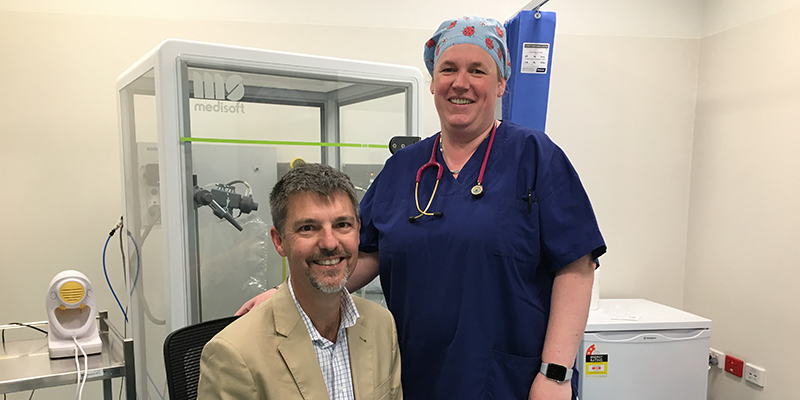
A Perth study has shown that over-the-counter asthma medication before surgery can reduce respiratory complications during and after tonsillectomy surgery.

Professor Carol Bower has received the prestigious ICBDSR Distinguished Service Award for her work on birth defects - a career that spans 35 years.
To investigate the physicochemical compatibility of caffeine citrate and caffeine base injections with 43 secondary intravenous drugs used in Neonatal Intensive Care Unit settings.
Syphilis is an important global health threat and little has changed in its treatment since the mid-20th century. For late-latent or syphilis infection of unknown duration, the standard treatment of multiple intramuscular injections of benzathine penicillin G (BPG) are associated with significant pain and distress to clients and caregivers, negatively impacting on treatment completion.
The early years is a critical stage to establish optimal nutrition and movement behaviours. Community playgroups are a relaxed environment for parents with a focus on social connection and supporting parents in their role as 'First Teachers'. Playgroups are therefore an opportunistic setting to promote health behaviours in the early years.
Technology use in type 1 diabetes (T1D) is impacted by socioeconomic status (SES). This analysis explored relationships between SES, glycemic outcomes, and technology use.
Iron deficiency may play a role in the pathophysiology of Attention Deficit/Hyperactivity Disorder (ADHD). Due to its preponderant function in monoamine catecholamine and myelin synthesis, brain iron concentration may be of primary interest in the investigation of iron dysregulation in ADHD.