
Search
At The Kids, our vision is simple - happy healthy kids. Our goal is to make a real difference in our community to benefit children and families everywhere. Our values underpin the way we work and make decisions: collaboration, courage, evidence, respect.
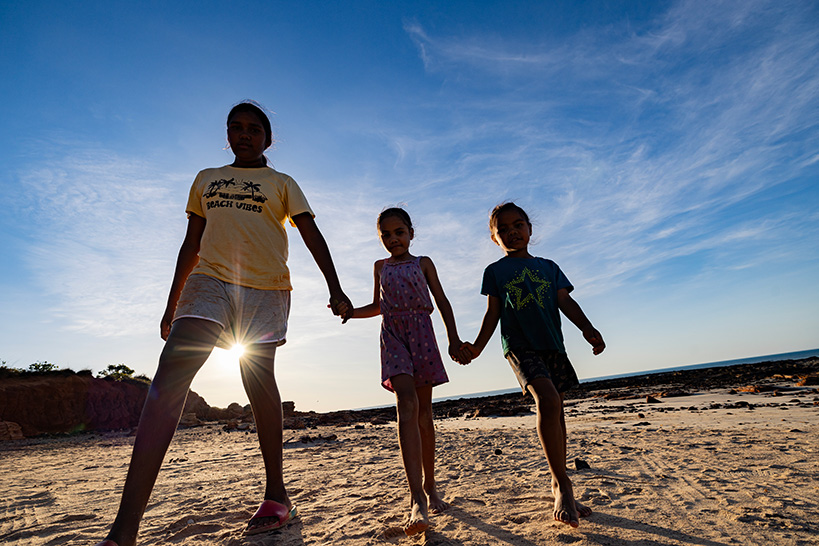
Aboriginal health is everyone's business. The needs of Aboriginal and Torres Strait Islander families and kids is integrated into all relevant areas of our work. Improving the health and wellbeing of Aboriginal and Torres Strait Islander kids and families is an overarching priority for every team at The Kids.
It is now well accepted that germline or de novo genetic alterations predispose to cancer development, especially during childhood. Among them, constitutive trisomy 21, also known as Down syndrome (DS), has been shown to predispose to acute leukemia affecting both the myeloid (ML-DS) and lymphoid (DS-ALL) lineages. ML-DS is associated with a good prognosis compared to children without DS, due in part to a higher sensitivity to conventional chemotherapy.
Aboriginal and Torres Strait Islander young people aged 15-24 years of age often encounter challenges accessing and utilising primary health care (PHC). Providing health care responsive to the needs of Aboriginal and Torres Strait Islander young people requires the active involvement of healthcare providers (HCPs), who play a central role in healthcare delivery. This study explored perspectives of HCPs working in urban Aboriginal and Torres Strait Islander Community-Controlled Health Organisations (ATSICCHOs) on the factors that facilitate Aboriginal and Torres Strait young people accessing and utilising PHC services.
Seven female individuals with multiple congenital anomalies, developmental delay and/or intellectual disability have been found to have a genetic variant of uncertain significance in the mediator complex subunit 12 gene. The functional consequence of this genetic variant in disease is undetermined, and insight into disease mechanism is required.
Allergic sensitization and reduced ability to respond to viral infections may contribute to virus-induced wheeze and asthma development in young children. Plasmacytoid dendritic cells (pDC) are rare immune cells that produce type I interferons (IFN-I) and play a key role in orchestrating immune responses against viruses.
ETV6::RUNX1 is one of the most common recurrent genomic abnormalities in acute lymphoblastic leukaemia (ALL) and is associated with a good prognosis. High expression of NTRK1, encoding tropomyosin receptor kinase A (TrkA), confers a poor prognosis in other malignancies and may contribute to therapy resistance in patients with ETV6::RUNX1 B-ALL.
The introduction of universal newborn hearing screening has allowed for early identification and diagnosis of children with severe-profound hearing loss. This study aims to provide the first Western Australian perspective on the surgical feasibility and safety of cochlear implantation before 12 months of age.
The self-concordance model (SCM) examines the entire sequence from goal inception to attainment and presents a framework for how outcomes vary based on the quality of motivation for goal striving. The first aim of this systematic review and meta-analysis was to synthesize a rich literature on the topic spanning over 25 years and present a cohesive picture of the associations among the SCM constructs.
Young people transitioning from out-of-home care (OHC) frequently experience poor mental health and resilience due to adverse childhood experiences (ACEs). However, there is limited understanding of the factors that mediate and moderate these outcomes. This is the first study to integrate linked administrative and longitudinal data to examine the mediation and moderation effects of placement stability, independent living skills (ILS), social inclusion, and self-determination when examining the association between ACEs and care status on mental health and resilience.