
Search
Respiratory oscillometry (or the forced oscillation technique) is a highly practical lung function test that can be applied in a wide range of clinical scenarios in children and adults, including the clinic, intensive care unit, patient home monitoring and emergency departments. Oscillometry measurements complement spirometry in detecting abnormal lung function, measuring effects of treatment such as inhaled corticosteroids or bronchodilators, and changes due to disease activity.
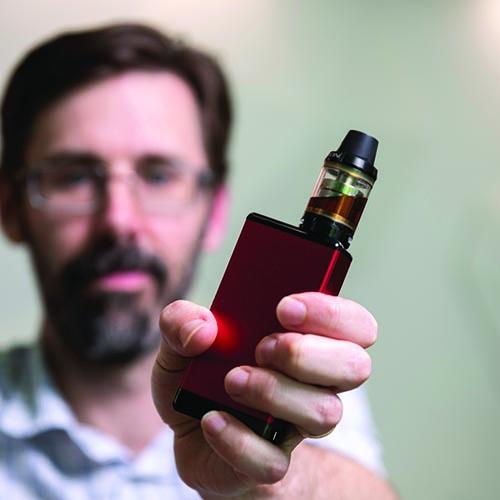
Research into the potential health impacts of vaping is starting to back up concerns that electronic cigarettes (e-cigarettes) are not as benign as many people think.
We aimed to ascertain the fit of the European Respiratory Society Global Lung Initiative 2012 reference ranges to contemporary Australasian spirometric data.
Prediction bias in spirometry reference equations can arise from combining equations for different age groups,...
In this review, we have examined the role of lung function testing in infants and preschool children with CF.
In infants and children with chronic respiratory disease, hypoxia is a potential risk of aircraft travel.
Advances in statistical modelling have allowed the creation of smoothly changing spirometry reference ranges that apply across a wide age range and better...
We investigated predictors of nasopharyngeal carriage in Australian Aboriginal and non-Aboriginal children.
The aim of our study was to determine the contribution of secular trends and sample size to lung function reference equations, and establish the number...
Respiratory function impacts on musical expression for wind/brass (W/B) musicians. Investigation of musicians' respiratory health to date has rarely...