Search
Research
Evaluation of a Community-Led Program for Primordial and Primary Prevention of Rheumatic Fever in Remote Northern AustraliaEnvironmental factors including household crowding and inadequate washing facilities underpin recurrent streptococcal infections in childhood that cause acute rheumatic fever (ARF) and subsequent rheumatic heart disease (RHD).
Research
Overlapping Streptococcus pyogenes and Streptococcus dysgalactiae subspecies equisimilis household transmission and mobile genetic element exchangeStreptococcus dysgalactiae subspecies equisimilis and Streptococcus pyogenes share skin and throat niches with extensive genomic homology and horizontal gene transfer possibly underlying shared disease phenotypes.
Research
Outcomes of rheumatic fever in Uganda: a prospective cohort studyRheumatic heart disease is the largest contributor to cardiac-related mortality in children worldwide. Outcomes in endemic settings after its antecedent illness, acute rheumatic fever, are not well understood. We aimed to describe 3-5 year mortality, acute rheumatic fever recurrence, changes in carditis, and correlates of mortality after acute rheumatic fever.
Research
Describing skin health and disease in urban-living Aboriginal children: co-design, development and feasibility testing of the Koolungar Moorditj Healthy Skin pilot projectIndigenous children in colonised nations experience high rates of health disparities linked to historical trauma resulting from displacement and dispossession, as well as ongoing systemic racism. Skin infections and their complications are one such health inequity, with the highest global burden described in remote-living Australian Aboriginal and/or Torres Strait Islander (hereafter respectfully referred to as Aboriginal) children. Yet despite increasing urbanisation, little is known about the skin infection burden for urban-living Aboriginal children.
Research
Research opportunities for the primordial prevention of rheumatic fever and rheumatic heart disease - streptococcal vaccine development: a national heart, lung and blood institute workshop reportStreptococcus pyogenes, also known as group A streptococcus (StrepA), is a bacterium that causes a range of human diseases, including pharyngitis, impetigo, invasive infections, and post-infection immune sequelae such as rheumatic fever and rheumatic heart disease. StrepA infections cause some of the highest burden of disease and death in mostly young populations in low-resource settings. Despite decades of effort, there is still no licensed StrepA vaccine, which if developed, could be a cost-effective way to reduce the incidence of disease.
Research
Subcutaneous infusion of high-dose benzathine penicillin G is safe, tolerable, and suitable for less-frequent dosing for rheumatic heart disease secondary prophylaxis: a phase 1 open-label population pharmacokinetic studySince 1955, the recommended strategy for rheumatic heart disease secondary prophylaxis has been benzathine penicillin G injections administered intramuscularly every 4 weeks. Due to dosing frequency, pain, and programmatic challenges, adherence is suboptimal. It has previously been demonstrated that BPG delivered subcutaneously at a standard dose is safe and tolerable and has favorable pharmacokinetics, setting the scene for improved regimens with less frequent administration.
Research
Otitis media at 6-monthly assessments of Australian First Nations children between ages 12–36 months: Findings from two randomised controlled trials of combined pneumococcal conjugate vaccinesIn remote communities of northern Australia, First Nations children with hearing loss are disproportionately at risk of poor school readiness and performance compared to their peers with no hearing loss. The aim of this trial is to prevent early childhood persisting otitis media (OM), associated hearing loss and developmental delay.
Research
Left ventricular remodelling in rheumatic heart disease – trends over time and implications for follow-up in childhoodRheumatic heart disease (RHD) is the most common form of acquired heart disease worldwide. In RHD, volume loading from mitral regurgitation leads to left ventricular (LV) dilatation, increased wall stress, and ultimately LV dysfunction. Improved understanding of LV dynamics may contribute to refined timing of intervention.
News & Events
Finding answers for Tenaya: from a sore throat to open-heart surgeryWhen Katrina took her daughter Tenaya to the local emergency department for the fourth time, she was determined she wouldn’t be leaving without answers.
News & Events
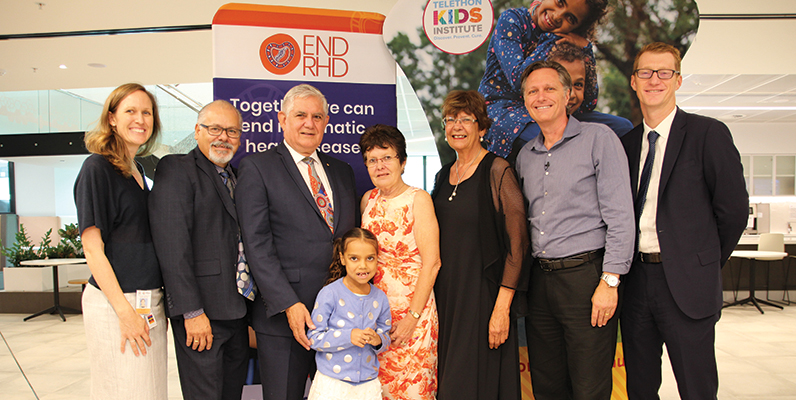
Ending deadly heart disease finally within our sightsIt's been a huge year for those working to eliminate rheumatic heart disease (RHD), with breakthroughs including $35M in funding to develop a Strep A vaccine.