Skip to content
The Kids Research Institute Australia logo
Donate

No results yet

Search

Research

Socio-economic inequality underpins inequity in influenza vaccination uptake between public and private secondary schools: an Australian population-based study

Socio-economic inequality and vaccination inequity have long been critical issues. However, no studies have explored the gap in influenza vaccination uptake between public and private schools. Importantly, the extent to which socio-economic inequality translates into vaccination uptake inequity has not been quantified.

Research

Impact of vaccine mandates and removals on COVID-19 vaccine uptake in Australia and international comparators: a study protocol

Vaccination against SARS-CoV-2 was a crucial public health measure during the COVID-19 pandemic. Among the multiple strategies developed to increase vaccine uptake, governments often employed vaccine mandates. However, little evidence exists globally about the impact of these mandates and their subsequent removal on vaccine uptake, including in Australia, France, Italy and the USA.

Research

Automated reporting of primaquine dose efficacy, tolerability and safety for Plasmodium vivax malaria using a systematic review and individual patient data meta-analysis

The antirelapse efficacy of primaquine is related to the total dose administered, whereas the risks of haemolysis and gastrointestinal intolerance are associated with the daily dose administered. National Malaria Control Programmes require local information on efficacy, tolerability and safety to optimize antimalarial treatment policies for Plasmodium vivax malaria control and elimination efforts.

Research

Vaccination

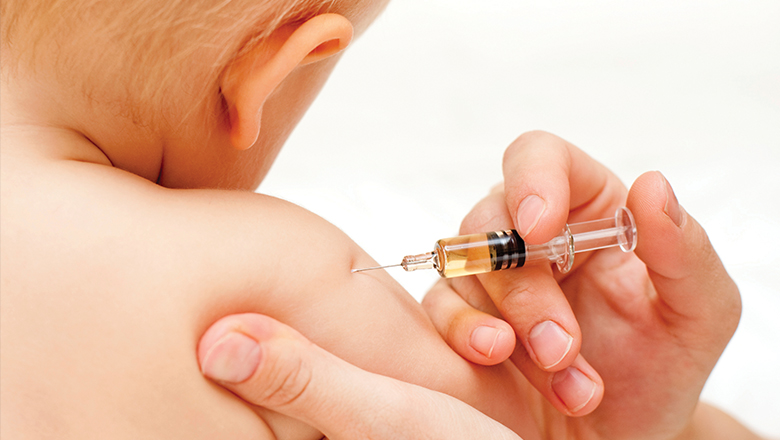
Vaccination is the injection of an inactivated bacteria or virus into the body. This simulated infection allows an individual's immune system to develop an adaptive immunity for protection against that type of illness. When a sufficiently large percentage of a population has been vaccinated, this results in herd immunity.

Research

Hearing loss in Australian First Nations children at 6-monthly assessments from age 12 to 36 months: Secondary outcomes from randomised controlled trials of novel pneumococcal conjugate vaccine schedules

In Australian remote communities, First Nations children with otitis media (OM)-related hearing loss are disproportionately at risk of developmental delay and poor school performance, compared to those with normal hearing. Our objective was to compare OM-related hearing loss in children randomised to one of 2 pneumococcal conjugate vaccine (PCV) formulations.

Research

From speculative to real: Community attitudes towards government COVID-19 vaccine mandates in Western Australia from May 2021 to April 2022

Many governments employed mandates for COVID-19 vaccines, imposing consequences upon unvaccinated people. Attitudes towards these policies have generally been positive, but little is known about how discourses around them changed as the characteristics of the disease and the vaccinations evolved.

Research

Statistical considerations for the platform trial in COVID-19 vaccine priming and boosting

The Platform trial In COVID-19 priming and BOOsting (PICOBOO) is a multi-site, adaptive platform trial designed to generate evidence of the immunogenicity, reactogenicity, and cross-protection of different booster vaccination strategies against severe acute respiratory syndrome coronavirus 2 and its variants, specific for the Australian context.

Research

Nudging towards COVID-19 and influenza vaccination uptake in medically at-risk children: EPIC study protocol of randomised controlled trials in Australian paediatric outpatient clinics

Children with chronic medical diseases are at an unacceptable risk of hospitalisation and death from influenza and SARS-CoV-2 infections. Over the past two decades, behavioural scientists have learnt how to design non-coercive 'nudge' interventions to encourage positive health behaviours. Our study aims to evaluate the impact of multicomponent nudge interventions on the uptake of COVID-19 and influenza vaccines in medically at-risk children.

Research

Infant Whole-Cell Versus Acellular Pertussis Vaccination in 1997 to 1999 and Risk of Childhood Hospitalization for Food-Induced Anaphylaxis: Linked Administrative Databases Cohort Study

Evidence suggests that children who had received an initial priming dose of whole-cell pertussis (wP) vaccine, rather than acellular pertussis (aP) vaccine, had a lower risk of developing IgE-mediated food allergy, the most common cause of anaphylaxis-related hospital presentations of childhood.

Research

Antibody responses against influenza A decline with successive years of annual influenza vaccination

Influenza vaccine effectiveness and immunogenicity can be compromised with repeated vaccination. We assessed immunological markers in a cohort of healthcare workers (HCW) from six public hospitals around Australia during 2020-2021.