
Search

Three outstanding The Kids Research Institute Australia researchers have been named finalists in the 2016 Premier's Science Awards

The Kids Research Institute Australia researchers have been awarded more than $10 million in research funding from the National Health and Medical Research Council (NHMRC).
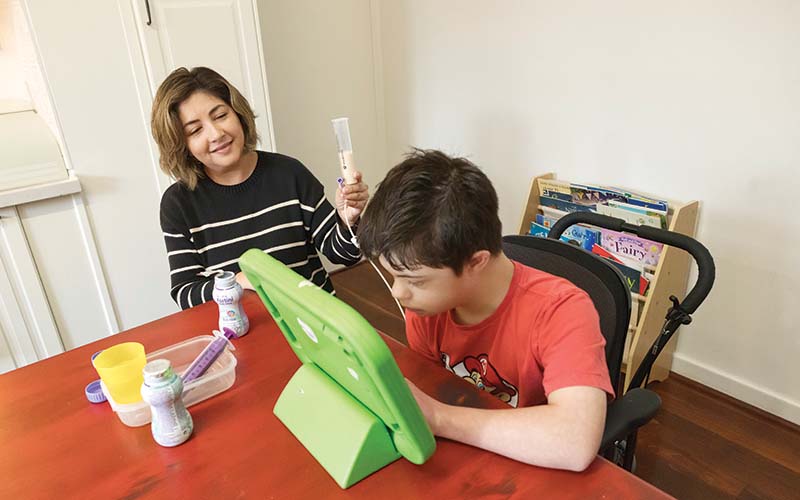
For thousands of children around Australia with intellectual and other disabilities, the process of eating can be traumatic, posing challenges that veer from uncomfortable to life threatening.
Dissociative disorders in children and young adolescents are under-recognised and under-treated. Current diagnostic criteria rely on downward extensions of adult models and do not adequately consider developmental differences in younger populations. This reliance risks overlooking symptom patterns that may be unique in childhood, thereby perpetuating diagnostic gaps and delayed treatment.
To characterize sleep profiles in individuals with neurogenetic disorders (NGDs) and examine the contribution of key clinical and psychiatric symptoms to these profiles.
This convergent parallel mixed methods study examined the role of protective factors (resilience, family functioning, and social support) in explaining sibling well-being, alongside this population's support preferences and experiences.
With advances in perinatal care, we have achieved major reductions in mortality in premature and critically ill infants, but they still remain at increased risk of neurodevelopmental disability. In this context, recent advances in neuroimaging are perceived as an addition of significant value to current clinical developmental screening programs.
The implementation of an intervention protocol aimed at increasing vocal complexity in three pre-linguistic children with cerebral palsy (two males, starting age 15 months, and one female, starting age 16 months) was evaluated utilising a repeated ABA case series design. The study progressed until the children were 36 months of age. Weekly probes with trained and untrained items were administered across each of three intervention blocks.
To report on knowledge translation strategies and outcomes from the implementation of the early detection guidelines for cerebral palsy (CP) in a state-wide tertiary early intervention (EI) service and investigate the impact of social determinants on clinical services.
Reading Disability is often characterized by difficulties in the phonology of the language. While the molecular mechanisms underlying it are largely undetermined, loci are being revealed by genome-wide association studies.